X-Nav
Benefit From Our Modern Practice
Enjoy a Smoother Path to Your New Smile With X-Nav in Norfolk
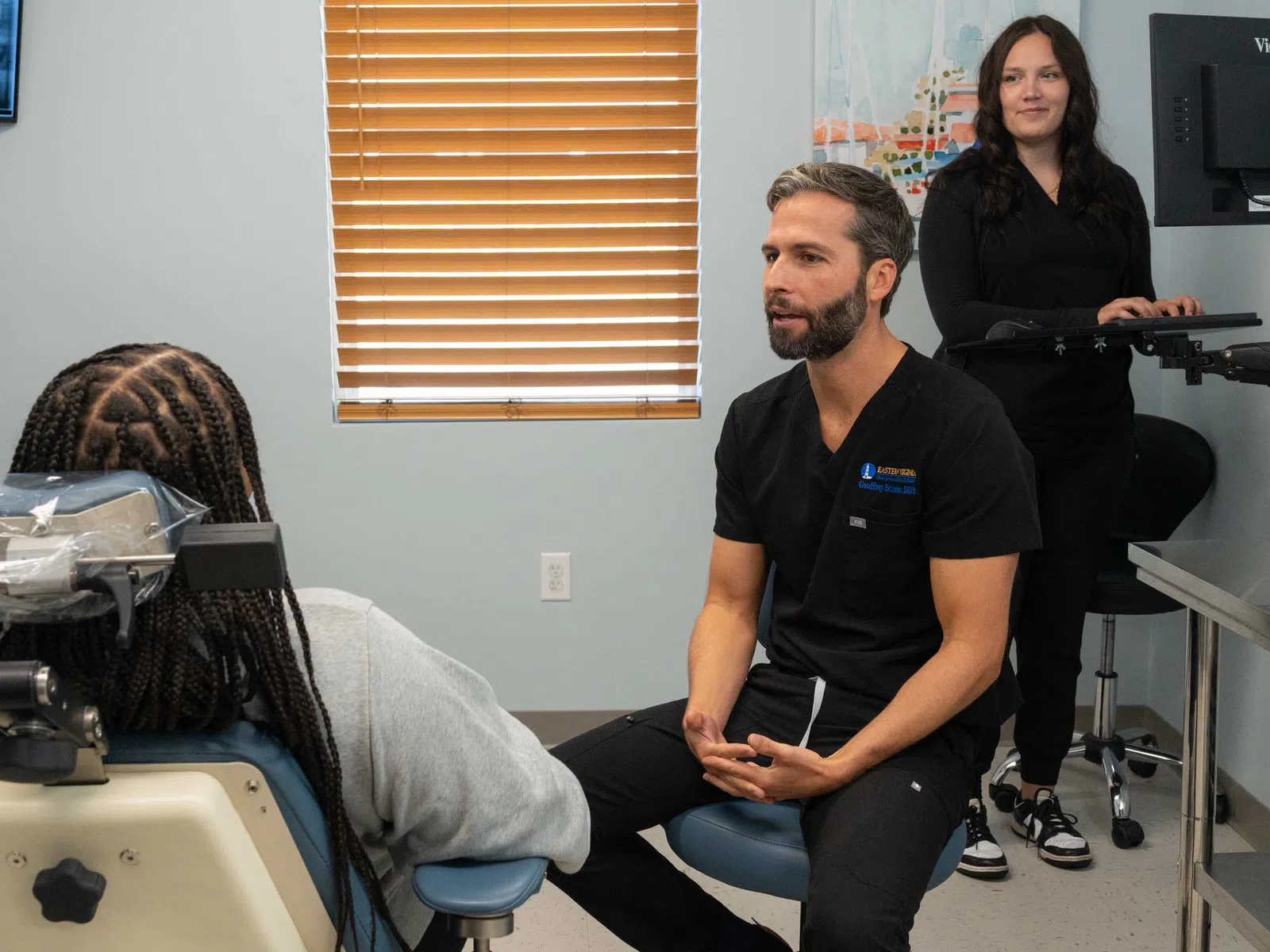
Seeing every movement on screen during implant surgery helps ensure that your surgeon places each dental implant exactly where it belongs. That clarity means a more predictable procedure and a better start for your smile. Our board-certified surgeons use X-Nav in Norfolk to track implant placement as it happens. Tracking markers on the drill and a small clip on your teeth let the system display a live 3-D view. Your surgeon will compare that view to your digital plan and make fine adjustments along the way.
Because there's no bulky guide in your mouth, this system works especially well for back teeth. X-Nav technology also allows changes during surgery if your bone quality differs from pre-procedure scans. Schedule a consultation today to learn whether navigated implant surgery fits your needs.
Discover How Digital Guidance Leads to Better-Fitting Implants
Real-time guidance means your surgeon can see how each implant lines up in your mouth. When the implant sits at the right angle, your crown or bridge fits more naturally and handles chewing forces evenly. Well-aligned implants are also easier to clean around.
Navigated implant surgery benefits people who need implants in tight or hard-to-reach areas. Back molars and mouths with limited opening are good examples, since a bulky printed guide can get in the way. It also helps when bone is thin or a nerve sits close to the planned site.
Dynamic navigation also works well when an implant is placed right after a tooth is removed. Because the plan can be refined on the spot, your surgeon can adapt to the socket without delay.
Find out how X-Nav in Norfolk can give you a better implant experience. Contact our office today for a consultation.
Back-Tooth Precision
Guided navigation helps place molar implants precisely in areas that are hard to see directly during surgery.
More Natural Crowns
Correct implant angles let your final crown sit in line with neighboring teeth for a seamless smile.
Quicker Treatment Start
Skipping a custom printed guide can save time between your planning visit and surgery day.
Same-Day Flexibility
Navigation adapts well to immediate placement, so an implant can often follow tooth removal in one visit.
Less Jaw Strain
Without a bulky guide, you won't need to open your mouth as wide, which can ease jaw strain.
Frequently Asked Questions About X-Nav
Q What is X-Nav?
X-Nav is a dynamic navigation system that guides dental implant placement in real time. It tracks the drill's position and shows it on a screen next to a digital plan made from a 3-D scan. The surgeon follows this live view to place each implant at the planned angle and depth.
Q Can X-Nav be used to place implants for back teeth?
X-Nav can be used to place implants for back teeth and is especially helpful there because it doesn't require a bulky guide in the mouth. Molars sit in tight spaces that can be hard to reach with traditional guided surgery. The live display helps the surgeon place implants precisely even when direct visibility is limited.
Q Can X-Nav be used for immediate implant placement?
X-Nav can be used for immediate implant placement after a tooth is removed. The surgeon plans the implant on a 3-D scan beforehand. After extraction, real-time tracking helps guide the implant into the best position within the socket. The plan can also be adjusted on the spot if needed. Enough healthy bone must remain.
Q What does the surgeon see on the X-Nav screen?
The surgeon sees a live 3-D image of your jaw on the X-Nav screen, along with the drill's exact position. The planned implant path appears as a guide. Visual cues show whether the angle and depth match the plan. This lets the surgeon make small corrections instantly. Nearby nerves can also appear on the display.
Q Is X-Nav FDA-cleared?
X-Nav dynamic navigation is FDA-cleared for dental implant surgery. The system has been used in implant procedures for several years. FDA clearance confirms it meets safety standards for its intended use. Surgeons receive specialized training before using the system to guide implant placement. It is one of several guided options available today.
Q Does X-Nav work if I have limited jaw opening?
X-Nav works well for people with limited jaw opening. Traditional surgical guides sit inside the mouth and require extra space. X-Nav uses an on-screen display instead, so the mouth doesn't need to open as wide. This can make implant surgery more comfortable for people with jaw stiffness or TMJ concerns.
Q How does X-Nav help avoid nerve injury during implant placement?
X-Nav can help avoid nerve injury during implant placement by showing the drill's position relative to nearby nerves in real time. The surgeon marks the nerve path on a 3-D scan before surgery. During placement, the live display helps keep the drill at a safe distance. This is especially valuable in the lower jaw.
Q Will I feel anything different during X-Nav surgery?
You won't feel anything different during X-Nav surgery compared with standard implant surgery. Local anesthesia numbs the area, and the tracking clip on your teeth is lightweight. The cameras and screen stay outside your mouth. Most people are unaware of the navigation system while the surgeon works. Sedation may also be available.

