Technology
Benefit From Our Modern Practice
Feel Confident in Every Step of Your Care With Advanced Technology in Norfolk
Knowing exactly how your procedure will unfold makes oral surgery feel calmer and more personal. Modern planning and guidance help each step go smoothly, so you spend less time wondering and more time healing. Our practice uses advanced technology in Norfolk to plan your care before you ever sit in the surgical chair. Detailed 3-D images show your jaw from every angle, and your surgeon can walk you through the plan on screen.
During implant surgery, robotic and navigated guidance help your surgeon follow that plan with precision. Digital records afterward help your new teeth fit as designed. Combined with the skill of our board-certified surgeons, our high-tech equipment means fewer surprises on surgery day. Schedule a consultation to see how these advances can shape your treatment.
Learn How Advanced Systems Guide Each Stage of Surgical Treatment
Modern technology guides each stage of your surgical care, starting long before your procedure begins. Cone beam CT scans create a 3-D view of your jaw, and digital planning software maps each step.
Nomad handheld imaging lets your team capture quick X-rays chairside. You can review the plan with your surgeon and ask questions with the images in front of you.
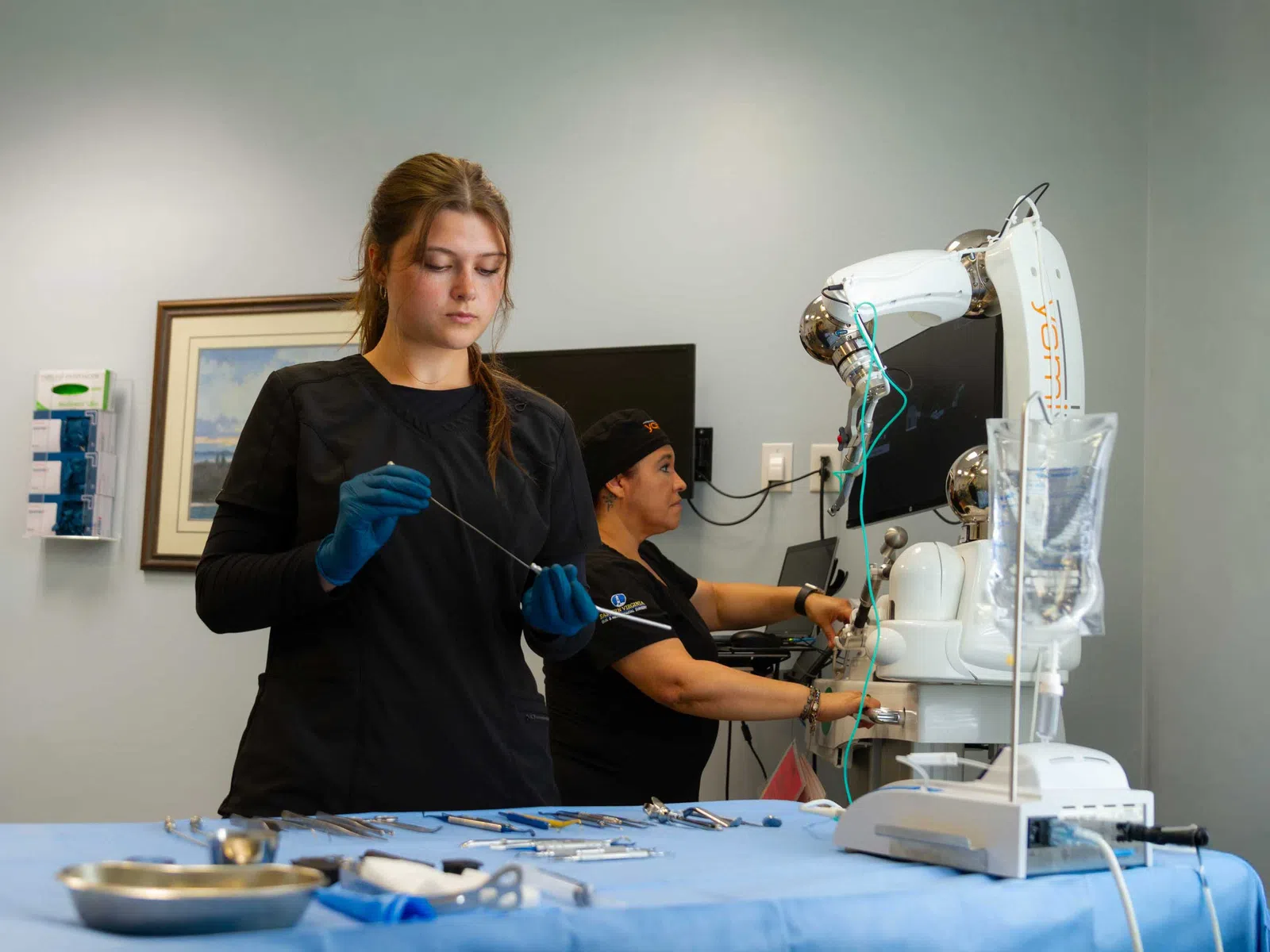
During implant surgery, Yomi robotic guidance and X-Nav dynamic navigation help your surgeon follow the planned angle and depth. These systems add a layer of precision near nerves and sinuses.
After placement, photogrammetry records exact implant positions. A 3-D printing workflow then connects that data to your final teeth, helping them fit comfortably. Each step builds on the one before.
If you have questions about our advanced technology in Norfolk, reach out to our team today.
Digital Treatment Planning
Software lets your surgeon test implant positions virtually, so the best option is chosen before surgery.
Nomad Handheld Imaging
A portable X-ray unit captures quick images right at the chair, keeping your visit efficient and comfortable.
Yomi Robotic Guidance
Physical feedback from a robotic arm helps keep each implant on its planned path during placement.
X-Nav Navigation
Live on-screen tracking shows your surgeon exactly where the drill is, much like GPS for your mouth.
Photogrammetry Records
Precise digital measurements of implant positions help full-arch teeth fit securely and comfortably from day one.
Frequently Asked Questions About Technology
Q How does technology improve the oral surgery experience?
Technology improves the oral surgery experience by making each step more predictable. Detailed scans reduce guesswork, and digital plans help surgeons prepare for your specific anatomy. Guided systems help place implants where they were planned. Many people also feel calmer when they can see and understand their plan ahead of time.
Q Can I see my treatment plan before oral surgery?
You can often see your treatment plan before oral surgery when digital planning is used. Surgeons can display 3-D images of your jaw and show where each implant or incision will go. This visual explanation makes complex procedures easier to understand. It also gives you a chance to ask informed questions.
Q What is a Nomad handheld X-ray?
A Nomad handheld X-ray is a portable imaging device that captures dental X-rays right at the chair. It allows quick images without moving to a separate room. The device uses internal shielding to protect the operator and keeps radiation exposure low. It helps keep appointments efficient and comfortable for everyone involved.
Q Does robotic or navigated implant surgery cost more?
Robotic or navigated implant surgery may or may not cost more, depending on the practice. Some offices include guided surgery in their standard implant fees. Others add a separate charge. Insurance coverage usually depends on implant benefits rather than the technology used. Asking about costs during your consultation helps avoid surprises.
Q Is advanced imaging needed for every oral surgery procedure?
Advanced imaging is not needed for every oral surgery procedure. Simple extractions may only require standard X-rays. 3-D scans are most useful for implant planning and teeth near nerves. Cysts in the jawbone also benefit from 3-D views. Surgeons choose the right imaging for each situation to balance detail with low radiation exposure.
Q Will advanced technology make my recovery easier?
Advanced technology may make recovery easier for some people having implant surgery. Precise planning and guided placement can allow smaller incisions, which may reduce swelling and soreness. Shorter procedures may also help limit tissue disruption. Recovery still depends on the type of surgery and individual healing, along with following aftercare instructions closely.
Q How does technology help with full-arch implants?
Technology helps with full-arch implants by coordinating several implants into one precise plan. 3-D scans and digital planning map each implant's angle. Robotic or navigated guidance helps place them as designed. Photogrammetry then records exact positions so the full set of replacement teeth fits comfortably and securely. This coordination reduces adjustment visits later.
Q Can technology help with wisdom teeth removal?
Technology can help with wisdom teeth removal by showing exactly where each tooth and root sits. 3-D imaging reveals how close lower wisdom teeth are to the jaw nerve. This information helps the surgeon plan a safer extraction. It may also lower the risk of complications after surgery. Simpler extractions may need only standard X-rays.

